





Virtual ride over potholes: TECOSIM applies automotive expertise to e-bikes
The e-bike boom is powering momentum in the bicycle sector, not only for products but also for development processes. TECOSIM has been established as a partner for virtual product development in the automotive and aerospace industries for more than 30 years. However, the CAE specialists’ expertise can also be applied to other areas of mobility: for example, to modern e-bikes.
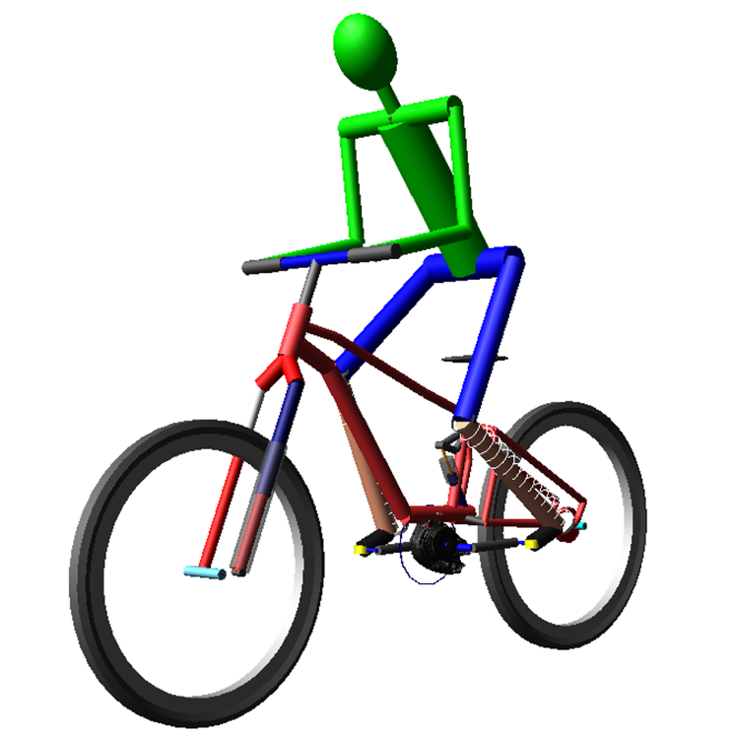
For instance, the engineers have developed a self-stabilising model, comprising a bike and rider. Using a Riese & Müller Delite Mountain e-mountain bike as a basis, they simulated a ride over potholes in a multi-body simulation. This simulation aimed to show the stress loads on individual components.
Methodology used in automotive sector applied
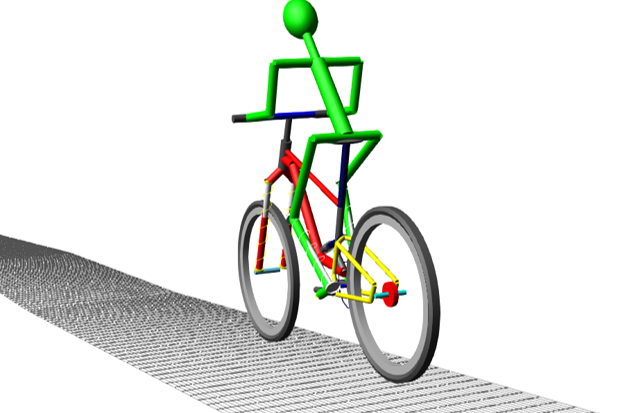
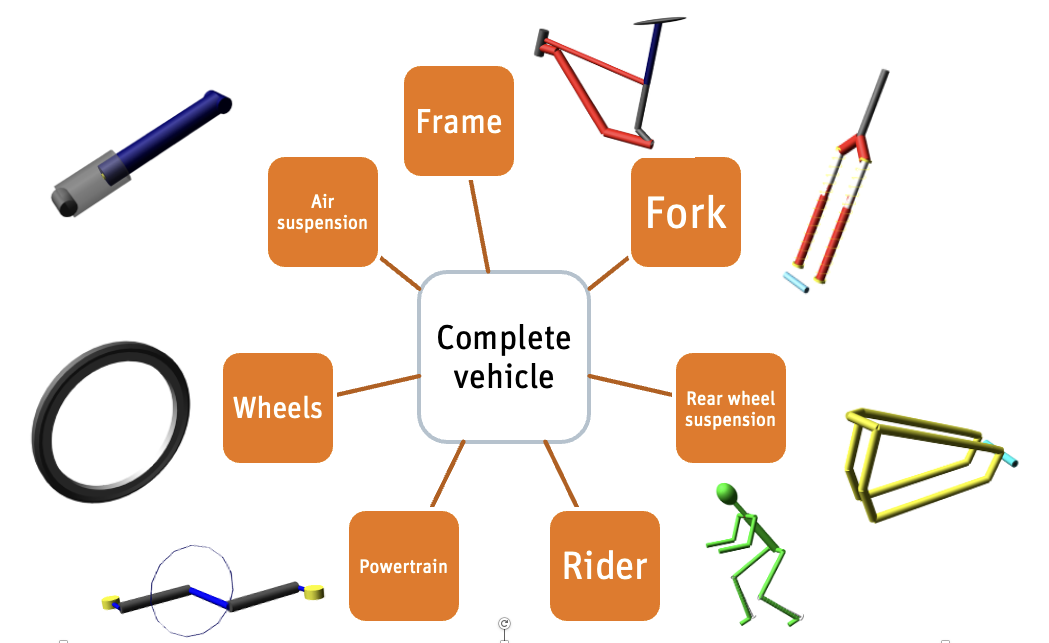
The riding dynamics simulation is performed with the ADAMS/Car software, a tool for multi-body dynamics simulations commonly used in automotive development. Rigid components such as the frame, fork or swingarm are connected via joints and force elements such as non-linear springs and dampers. Contact with the road surface is represented using suitable tyre models. Virtual driving robots control the riding manoeuvres.
The TECOSIM experts applied this modelling approach to a bicycle and rider system, with the rider’s weight and steering included. The model features a modular design: individual assembly groups were selected as templates and sub-systems. The level of model detail is flexible, meaning that the rear swingarm can be modelled as rigid or movable, for example. Masses, joint positions and spring rates are set as parameters, allowing for various configurations.
Self-stabilising steering and thermo-dynamic air suspension model
Two additions make the model exceptionally capable:
Steering regulator for stabilisation: a steering regulator stabilises the model automatically, ensuring the bicycle does not tip over immediately in the simulation. This means lifelike ride manoeuvres can be performed without the rider needing to actively intervene.
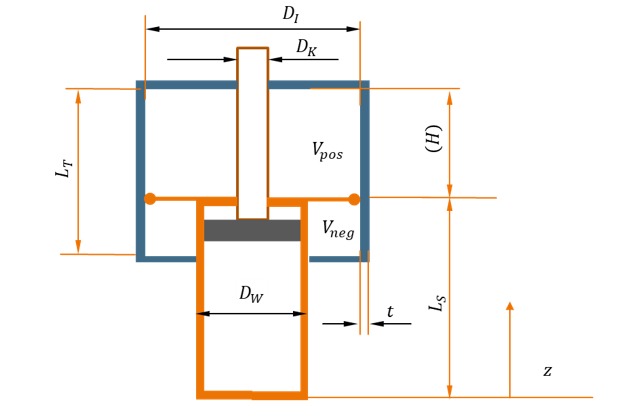
Physical air suspension model: a detailed air suspension model is used instead of simplified spring characteristics. It takes into account geometry (pistons, cylinders, wall thickness), initial pressure and heat exchange with the surrounding area. The model depicts both air chambers using three state equations (mass balance, energy balance, general gas equation) with no mass flow in or out.
The air suspension model realistically represents quasistatic and dynamic spring forces, avoiding the typical usage of a polytropic exponent. The thermal coupling ensures light, physically based damping.
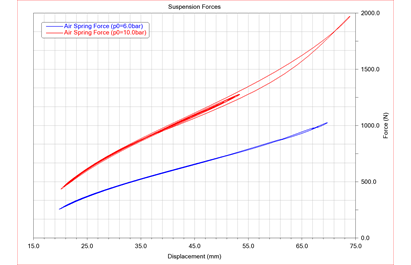
A force-deflection graph shows how different initial pressures affect suspension behaviour. Higher pressure (e.g. 10 bar) increases the suspension rate and behaviour in the design position. At the same time, the position of the air suspension changes in its idle state, which, in turn, affects the dynamics when riding over potholes.
Pothole simulation and results
The engineers used the MBS model to simulate riding over a pothole virtually. In doing so, they measured the forces at all connection points and force elements. The example of the rebound stop buffer in a mountain bike’s air suspension shows that a high initial pressure (red curve) allows the air suspension to rebound further, which causes more frequent contact with the rebound stop with the same rider load. The simulation thus delivers valuable insights into the mechanical load on the components without using physical prototypes and under clearly defined, reproducible conditions.
Conclusion
The requirements for modern e-bikes are on the rise – especially regarding comfort, safety and performance. With our expertise gained from automotive development and precise simulation methods, we are helping the bicycle sector with digital product development.