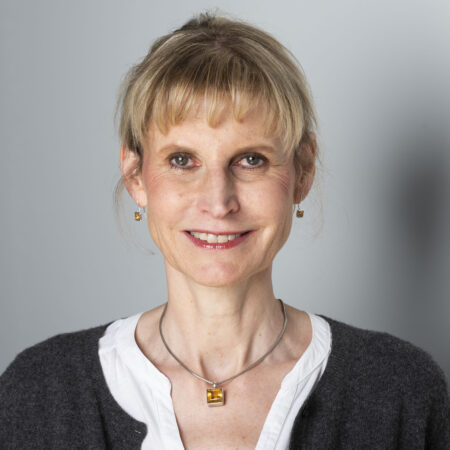






We want to inspire customers with our services
TECOSIM is stepping up its activities in the wind energy sector in both the UK and Germany and is seeking to make a name for itself as an expert development partner for energy transition. In Germany, expertise is concentrated in the Hamburg office while the Basildon location promotes the specialisation in the UK. We spoke to Janet Rix, Commercial Leader in the UK, and Tom Sill, Branch Manager in Hamburg, about the plans.
Janet, what specific objectives is TECOSIM UK pursuing in wind energy?
We’ve been building up strategic expertise over recent years. We now wish to make our service portfolio better known in this segment and inspire customers. A report for the British Government compiled by Martin Whitmarsh is helping us with this endeavour. Martin is the former CEO of McLaren Motor Sport. In his analysis, he finds that the offshore wind sector can benefit from other industries such as the automotive and aviation industries and can learn a great deal from their technologies. We’re also convinced this is the case and can contribute a great deal of expertise and many years’ experience.
Is TECOSIM UK already working for wind energy providers?
Janet: We’re working with small suppliers on innovation projects and have been signed up as possible development partners for companies such as Orsted, Vattenfall and GE Offshore. In March 2020 we took part in the Fit4 Renewables programme funded by Catapult ORE, within a record time of six months we were one of the first companies to be awarded this status and are now recognised within the Industry as part of a Cohort of Companies ready to work competently within the Energy sector. For those of you who don’t know what Catapult ORE is, it’s the leading research centre for offshore wind energy in the UK.
Are there any other projects?
Janet: Yes. We have supported an innovative British company, Max Nicholas Renewables, to develop an underwater turbine using continuous thrust technology. We used computer-aided engineering (CAE) and computational fluid dynamics (CFD) methods on this project. The findings have helped our customers to make key adjustments during the early design concept stage, this turbine will operate in shallow water and under turbulent conditions increasing the turbine technology’s efficiency significantly. This innovation has now been patented, is undergoing real time testing and will be launched on the market within the next few weeks.
And which suppliers have you already worked with in Hamburg?
Tom: The market is highly competitive, meaning that major OEMs are facing enormous cost pressure. Many development tasks are being offshored to low-priced countries. However, we have handled individual projects for OEMs based in Germany. We are still in discussions about possible support activities where we can contribute with our core CAE expertise. However, we do need to position ourselves against long-standing established partnerships in this field.
What exact approach are you taking to establishing yourselves on the market?
Tom: One of the things we’re doing is taking part in research projects, which helps us to broaden our expertise. We’re currently involved in the HANNAH, FANFOLD and Add2ReliaBlade projects, which are all set to run for three years. The partners for the HANNAH and FANFOLD projects are Leibniz University Hannover, the Fraunhofer Institute for Wind Energy Systems and the industrial enterprises Wölfel Engineering and TPI Composites.
Are you involved in research projects in the UK too?
Janet: We have worked on a feasibility study with the University of Hull. The project involves developing a tool to estimate the longevity of offshore wind farm systems such as turbine blades. It aims to identify critical fatigue load cases and develop a reliable design to reduce costs and risk. The findings have been published and there is now a better understanding of the estimated lifespan of a wind turbine.
And what are the German research projects about?
Tom: HANNAH provides assessment of new material types in rotor blade construction to increase blade lifetimes and strength. We are finishing this project in the spring. FANFOLD is a cost-effective, non-linear structural analysis method for large fibre-composite structures, particularly suitable for wind turbine rotor blades. This pioneering approach aims to predict the structural properties of the laminate through machine learning.
What is the idea behind Add2ReliaBlade?
Tom: The overall objective is to create a more reliable design for rotor blades by taking any deviations in dimensions into account at an early stage, for example. TECOSIM is responsible for two work packages: the first one involves reverse engineering. A software tool is to be used to import scan data based on computer tomographs of fibre-composite structures (rotor blades) and an existing FE model is to be adapted to the real structure. Defects will be included at a later stage. This will allow the real blade structure to be evaluated and any conservative assumptions to be eliminated. Weight can then be reduced and lifetime increased.
The second work package involves processing big data. Scan data will be searched to locate any rotor production defects. The intention is then to use AI to classify the types of damage and assess the severity of production defects.
TECOSIM UK forms part of the OWGP West pilot programme. What does OWGP stand for?
Janet: The Offshore Wind Growth Partnership (OWGP) is a long-term programme designed to promote collaboration across the supply chain and increase members’ productivity.
The WEST programme (Wind Expert Support Toolkit) helps achieve growth of companies within the offshore wind supply chain. Industry experts offer one-to-one coaching sessions on various topics such as the market and opportunities, legal requirements, competitors and OEMs. We have just completed this programme and have acquired a much better understanding of the sector and our opportunities.
What other marketing activities are planned in the UK?
Janet: We’ve launched an extensive social media and marketing campaign. Our target group are manufacturers of rotor blades, sea fastenings, floating turbines and cable manufacturers. Green Hydrogen technology is now becoming a significant part of future energy generation, we are conducting CFD analysis to understand where there would be high concentrations and build-up of Hydrogen in storage units and where sensors would be best placed. Having become part of the” Hydrogen East” Group we are looking for collaborative partners to continue this exploratory work.
And how do you plan to proceed with sales in Germany?
Tom: We’re currently marketing our involvement heavily on LinkedIn. We intend to report on ongoing research projects there over the coming months. We’re also in contact with potential clients and wish to expand this contact. Visits have been scheduled to the annual wind energy trade fairs in Husum and Hamburg to increase contact with potential clients.
One top priority for us is to exchange ideas with UK colleagues more closely to develop and promote a joint marketing strategy.
Janet, Tom: Thank you for talking to us.
TECOSIM is a partner in the Hannah research project and deals with various aspects of the simulation of wind turbine rotor blades.


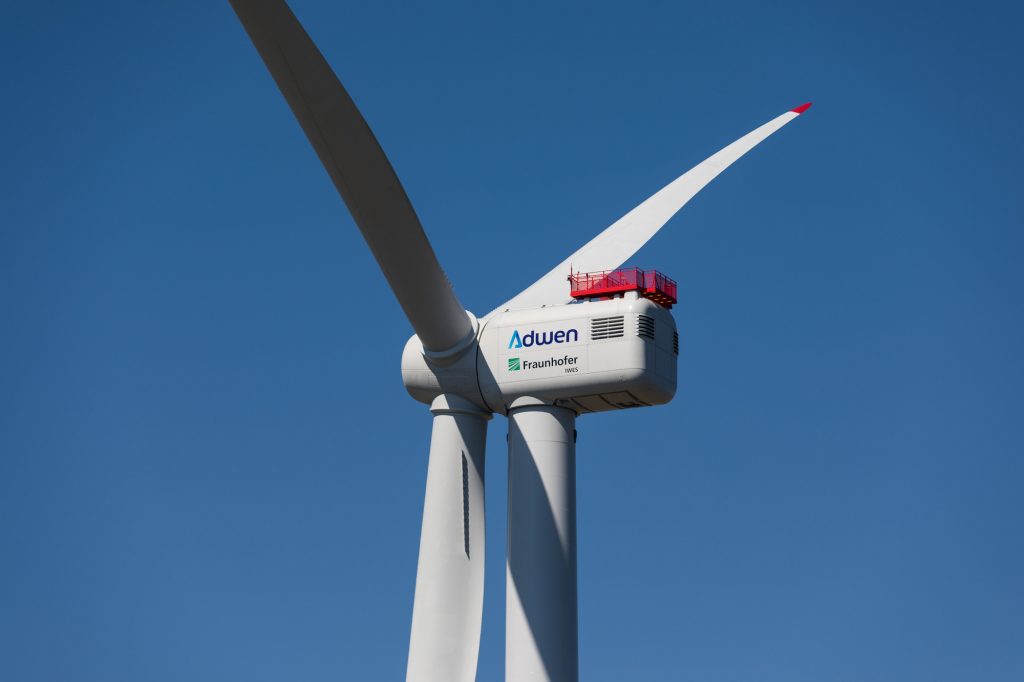

Header image courtesy of Fraunhofer IWES / HGross.